AI Versus Videographer for Video Content: Why Real People and Real Stories Still Matter
AI is changing the way video content is created, but for businesses that want to build genuine trust and showcase real people, products and workplaces, working with a professional video production company such as Wildwood Media remains the most powerful approach — with AI best used as a tool to support professional videography and media creation, rather than replace it.
Artificial intelligence has developed at an extraordinary pace. AI can now generate images, voices, scripts and increasingly sophisticated video content in seconds. For businesses considering video production UK, this naturally raises a question: do you still need a professional videographer?
We believe the answer is absolutely yes.
AI has an important role to play in modern production, and a forward-thinking video production agency should embrace useful new technology. However, there is a fundamental difference between generating content and capturing reality. If you want audiences to meet your people, experience your organisation and see your products or services in action, professionally filmed video remains incredibly difficult to replace.
AI Versus Video Production London and UK: Why Authenticity Matters
One of video’s greatest strengths is its ability to build human connection. When potential customers watch your team speaking passionately about their work, see your workplace in action or hear directly from a satisfied customer, they are seeing something real.
AI cannot genuinely recreate that authenticity.
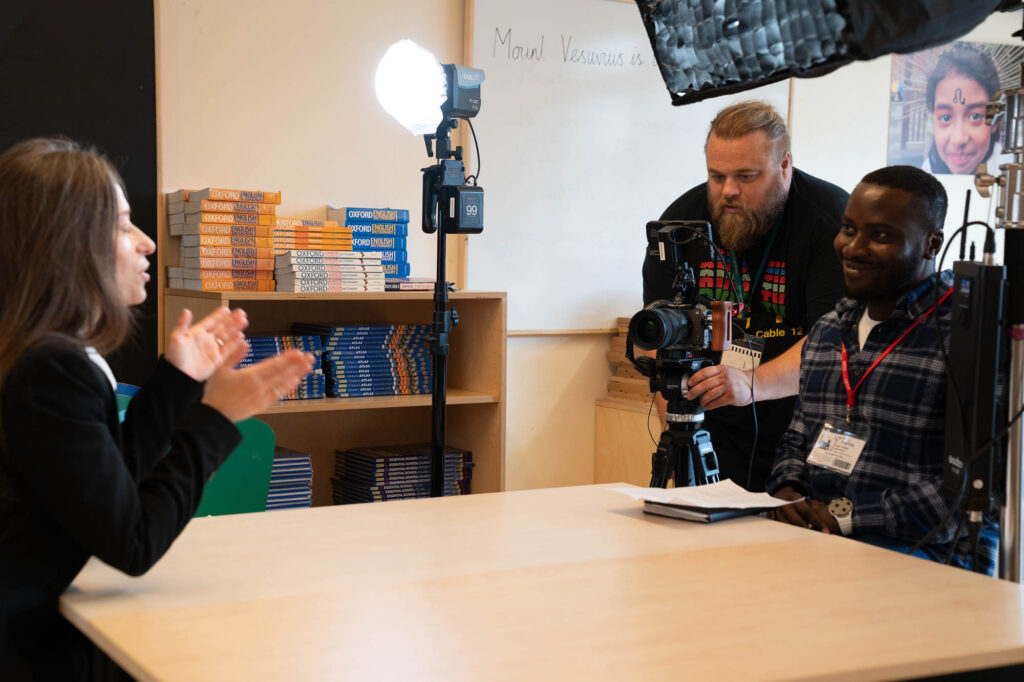
A professional Videographer Kent, for example, can enter a business and capture the details that make it unique: interactions between colleagues, the personality of the team, real customers and the atmosphere of the workplace. Likewise, a Videoographer Maidstone can film a genuine product, service or location exactly as audiences will experience it.
This authenticity is becoming increasingly important as AI-generated content becomes more common.
There has already been pushback from some audiences towards businesses using obviously AI-generated advertising and imagery, particularly when it replaces content that customers expect to be genuine. Audiences may question whether the people, products or experiences being presented actually exist.
For brands built on trust, this can create a problem.
If you are a school, charity, healthcare organisation or people-focused business, audiences want to see the real organisation. Parents want to see an actual school. Donors want to meet real people behind a charity’s work. Potential employees want to experience genuine workplace culture.
Professional Video production Kent and VIdeo production Maidstone allow organisations to show rather than simulate their story.
How AI Can Support a Video Production Agency and Video Editing UK
None of this means AI should be ignored. Used intelligently, AI can enhance the production process without replacing the human creativity at its heart.
A modern video production agency may use AI-supported technology to assist with tasks such as transcription, subtitling, content organisation, concept development and certain elements of video editing UK.
AI can also help generate ideas during pre-production or support the creation of additional assets. In some projects, AI-generated visuals may even be an effective creative choice — particularly when illustrating abstract concepts that would be impossible or prohibitively expensive to film.
The key is knowing when to use it.
AI works best as another tool available to filmmakers, just like animation, visual effects or motion graphics. It should enhance the story rather than become the story simply because the technology is available.
Real Videography Captures What Makes Your Organisation Different
Perhaps the biggest limitation of relying entirely on AI video is that it cannot capture what genuinely makes your organisation unique.
Your people are unique.
Your customers are unique.
Your workplace, culture and personality are unique.
A professional videographer can discover those qualities and translate them into a compelling visual story. Experienced filmmakers also react to unexpected moments during production — a spontaneous comment in an interview, a genuine interaction between colleagues or an emotional moment that could never have been planned in advance.
These moments often become the most memorable parts of a film.
The Human Element Behind the Camera Matters Too
There is also another human element that is sometimes overlooked: the people creating the video.
A good video production company takes time to understand your organisation. They ask questions, listen to your objectives and identify the stories worth telling.
During filming, an experienced videographer can make nervous interviewees feel comfortable, adapt when plans change and recognise opportunities that were not included in the original brief.
Technology can support this process, but human judgement, empathy and creativity remain essential.
AI Video Has a Place — But It Shouldn’t Replace Reality
AI-generated video will undoubtedly become an increasingly useful part of professional media creation. There will be projects where it adds significant creative value, and businesses should not be afraid to explore those opportunities.
However, for most organisations, AI should complement rather than replace professionally filmed content.
Whether you are investing in video production London, Video production Kent, VIdeo production Maidstone or wider video production UK, your strongest content will often come from showing audiences something genuine.
The future of video does not have to be AI versus the videographer. The best approach is likely to combine innovative technology with experienced human filmmakers who understand when and how to use it.
At Wildwood Media, we believe great video is ultimately about connection. AI can help us work smarter and expand creative possibilities, but professional videography captures something technology cannot manufacture: your real people, your real organisation and your real story.
And when building trust with your audience, reality remains incredibly powerful.